

Few landscaping problems create more frustration for homeowners than poor drainage.
Standing water, soggy lawns, erosion, foundation concerns, and muddy areas can all result from water not being directed properly across your property. The good news is that most drainage issues can be identified and corrected with the right combination of grading, drainage systems, and landscape solutions.
Here are some of the most common causes of yard drainage issues and the solutions we recommend.
Broken, Clogged, or Improperly Sized Downspouts
One of the most overlooked causes of drainage problems starts right at the roof.
When gutters become clogged with leaves and debris, rainwater can overflow and collect around the foundation of your home. Even when gutters are functioning properly, downspouts that are too short often dump large amounts of water directly next to the house.
During a heavy rainstorm, thousands of gallons of water can flow off your roof. If that water is concentrated in one area, it can create erosion, foundation issues, mulch washout, and standing water.
How We Fix It
The first step is ensuring gutters and downspouts are functioning correctly. In many cases, we recommend the following drainage solutions:
- Cleaning and repairing gutters
- Extending downspouts away from the foundation
- Installing underground drainage pipes
- Connecting downspouts to catch basins and drainage systems
By capturing roof runoff and directing it away from the home, we can eliminate many common drainage issues before they become major problems.
Tight Side Yards Between Homes
Many newer neighborhoods have homes built relatively close together. While this maximizes lot usage, it often creates drainage challenges.
Why Water Collects in Side Yards
When two houses sit close together, there is often very little room for water to spread out naturally. During heavy rainfall, water can become trapped between the homes and create a channel where runoff accumulates.
This often leads to muddy side yards and steady streams of water running across your lawn during heavy rains.
How We Fix It
The goal is to give water a designated path to follow.
Depending on the property, we may install:
Underground Drainage Pipes
Downspouts can be piped underground to move water away from the side yard entirely.
Catch Basins
Catch basins collect surface water and channel it into underground drainage systems before it has a chance to pool.
Drainage Swales
A drainage swale is a shallow, graded channel designed to direct water safely toward the front or rear of the property where it can properly discharge.
By combining these solutions, we can move water where it is supposed to go instead of allowing it to collect between homes.
Improper Grading Near Hillsides
Properties built near hills often experience drainage issues because gravity naturally sends water downhill.
If the lot was not graded correctly during construction, runoff from higher elevations can flow directly toward the home.
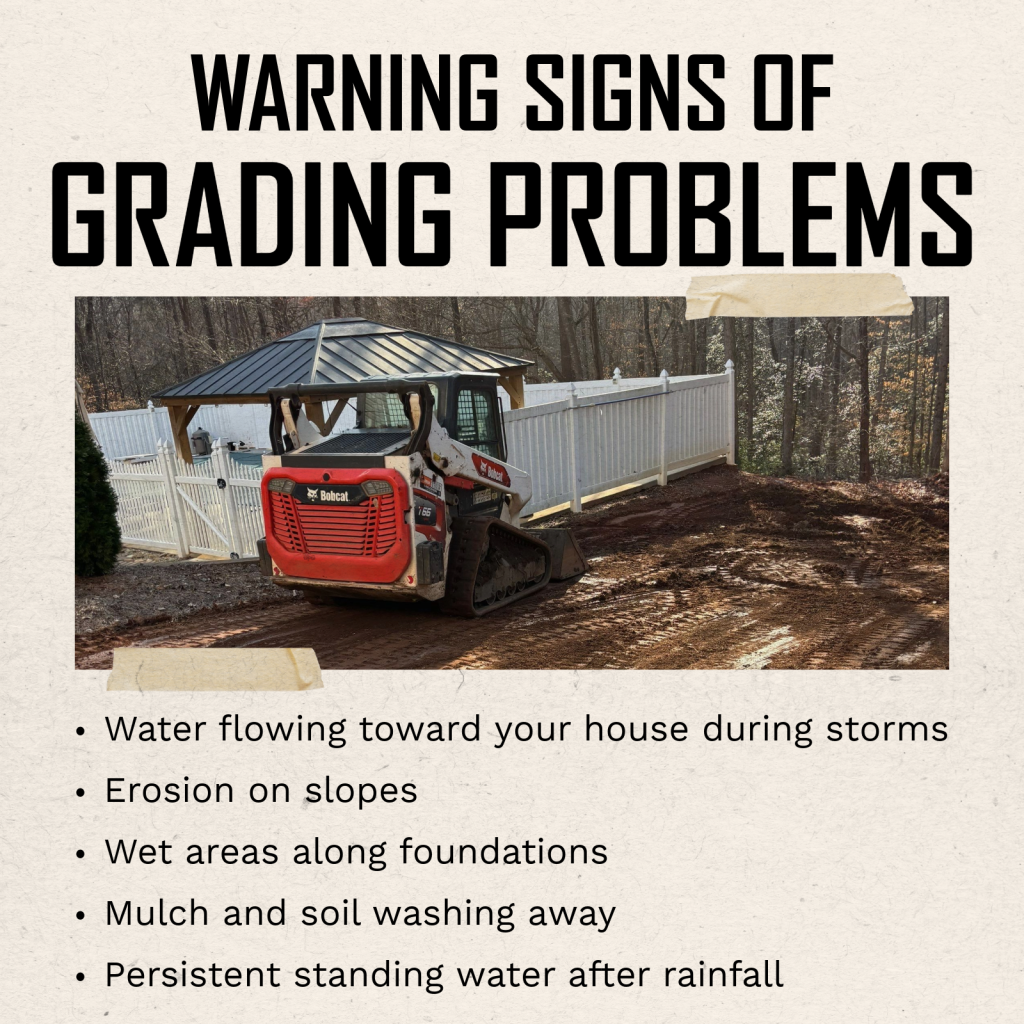
Warning Signs of Grading Problems
You may have a grading issue if you notice:
- Water flowing toward your house during storms
- Erosion on slopes
- Wet areas along foundations
- Mulch and soil washing away
- Persistent standing water after rainfall
How We Fix It
Proper grading solutions depend on the severity of the problem.
Berm Installation
A berm is a raised mound of soil designed to redirect water away from vulnerable areas.
Think of it as a natural barrier that acts like a backstop, guiding runoff toward a safer drainage route. Berms are often one of the most cost-effective solutions for managing hillside runoff.
Retaining Walls
In situations involving steep slopes or significant erosion, installing a retaining wall may be necessary.
Retaining walls help stabilize soil, control runoff, and create more usable outdoor space while protecting your home from water intrusion.
Our team evaluates each property to determine whether a berm, retaining wall, or combination of both will provide the best long-term solution.
Compacted Soil and Poor Lawn Drainage
Even if your grading appears correct, water may still struggle to soak into the ground.
Heavy clay soils and compacted soil conditions are common throughout many parts of South Carolina. When soil becomes compacted, rainfall cannot infiltrate properly and instead remains on the surface.
How We Fix It
Solutions may include:
- Regrading low areas
- Improving soil conditions
- Installing drainage systems
- Adding dry creek beds
- Creating drainage swales
These improvements help water move through or across the landscape more effectively.
The Importance of a Professional Drainage Assessment
Every property is unique. What causes standing water in one yard may be completely different from the problem affecting a neighboring property.
The most effective drainage solutions begin with identifying where the water originates, how it travels across the property, and where it should ultimately discharge. A properly designed drainage system addresses the root cause rather than simply treating the symptoms.
Drainage Solutions for Greenville and Spartanburg Homes
If you’re dealing with standing water, erosion, soggy areas, foundation concerns, or runoff problems, the team at SAV Landscaping can help. We specialize in drainage solutions including grading, catch basins, drainage swales, underground drainage piping, berm installation, retaining walls, and complete landscape drainage systems.
Contact SAV Landscaping today to schedule a drainage evaluation and protect your landscaping and property from runoff and water damage.