

If you are building a new patio or updating an existing one, then choosing the material you build it with will no doubt be one of the first (and most important) decisions you need to make. Pavers and concrete are the most common materials used for patios. Both options can create a functional and attractive outdoor living area, but they each come with different advantages, costs, and maintenance requirements.
The right choice often depends on your goals for the project, and we are here to help you figure those out!
Benefits of Concrete Patios
Concrete patios are popular because they are:
- Usually less expensive upfront
- Faster to install
- Simple and clean in appearance
- Durable when properly installed
For homeowners looking for a basic patio on a tighter budget, concrete can be a practical option.
Drawbacks of Concrete Patios
While concrete is durable, it does have some limitations.
Cracking Over Time
One of the biggest concerns with concrete patios is cracking. Changes in temperature, ground movement, and settling can all lead to visible cracks over time.
Difficult Repairs
When concrete cracks or stains, repairs are often noticeable. In many cases, large sections may need to be replaced to restore the appearance.
Benefits of Paver Patios
Many homeowners choose pavers because of their appearance and long term durability.
Better Appearance and Design Options
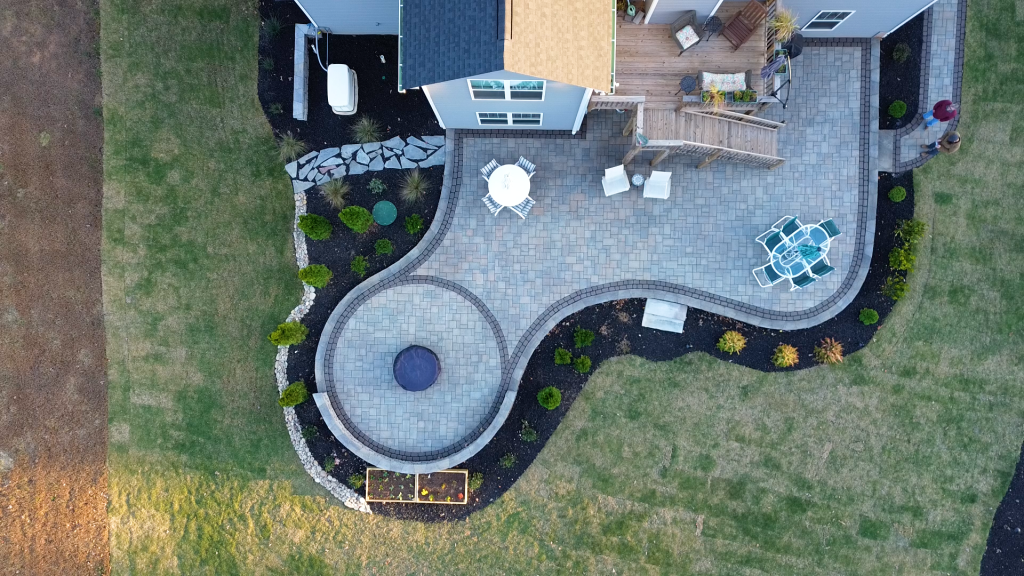
Pavers offer a more custom, high end look compared to plain concrete.
Popular Paver Styles
Homeowners can choose from:
- Modern pavers
- Traditional brick style pavers
- Natural stone pavers
- Multiple color combinations
- Decorative laying patterns
This flexibility makes it easier to match the patio to your home and landscaping. Check out our project portfolio for examples of paver patios we have installed to get some ideas for your home!
Easier Repairs
If one paver becomes damaged or stained, it can usually be removed and replaced individually without affecting the rest of the patio.
Handles Ground Movement Better
Because paver patios are made from individual units rather than one solid slab, they tend to handle slight ground movement better than concrete. This can help reduce major cracking issues over time.
Are Pavers More Expensive Than Concrete?
In most cases, yes.
Upfront Cost Comparison
Concrete patios generally have a lower initial installation cost. Paver patios usually cost more because of the additional labor and materials involved.
However, many homeowners feel the longer lifespan and easier maintenance of pavers help offset the higher upfront investment.
Maintenance Comparison
Both patio types require some maintenance to keep them looking their best.
Concrete Maintenance
Concrete may need:
- Crack repairs
- Pressure washing
- Resealing
- Stain treatment
Paver Maintenance
Paver patios may require:
- Occasional weed prevention between joints
- Replacing joint sand
- Periodic cleaning and sealing
Overall, paver maintenance is often easier to manage in smaller sections.
Which Patio Option Lasts Longer?
Both can last for decades when installed correctly, but pavers often have an advantage when it comes to long term appearance and repairability.
Concrete slabs can show age more quickly if cracking or discoloration develops. Pavers tend to maintain their appearance longer because individual sections can be repaired as needed.
Patio Installation Professionals in Greenville, SC
Both paver and concrete patios can create beautiful outdoor spaces, and the team at SAV Landscaping is here to help bring your landscaping up a notch! If you are considering a new patio installation, we are here to help you compare options and design the right outdoor space for your property. Contact us today for a free consultation.